Relations and affiliation
The main scenario such products are bought for: the system itself finds matching details between the company’s employees and its counterparties. A phone number shared by a buyer and a supplier’s director surfaces before the contract is signed.
Plan Standard plan and above.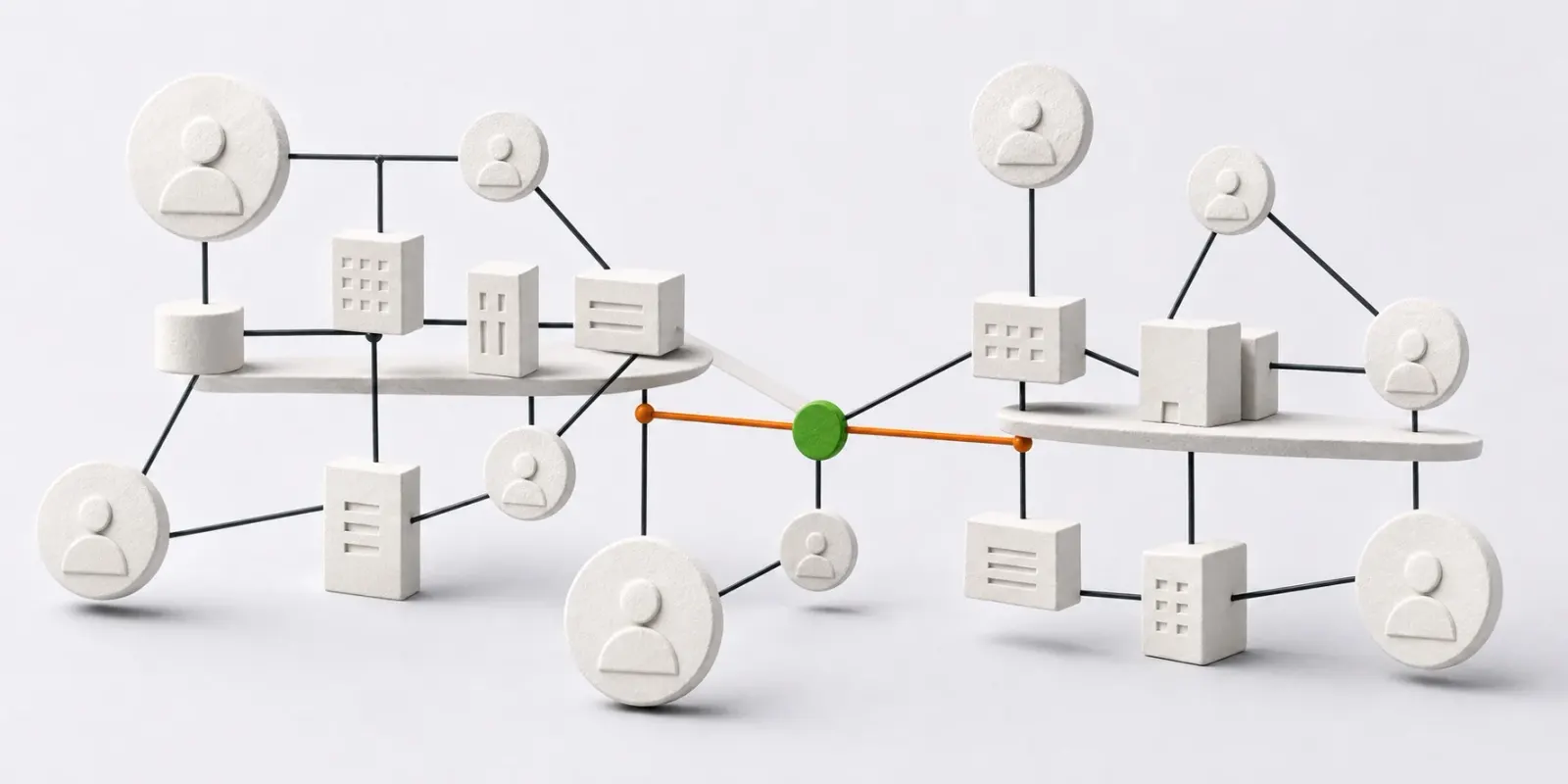
What is inside
- Fourteen relation types: founder, director, beneficiary, kinship, affinity, joint ownership
- Shared address, phone, email or bank account, former employer, joint procurement
- Relation source: declared by the subject, established by a specialist, detected automatically, external source
- Confidence: low, medium, high, confirmed
- Automatic relation detection by matching details
- A graph up to three levels deep with filters by type and confidence
- A new relation with an employee arrives as a monitoring event
- AI clustering suggests non-obvious groups as a hypothesis
Boundaries
An automatically detected relation stays a hypothesis until a specialist confirms it. The graph is built from the data in the system and the connected sources.
Frequent questions
How do we find a relation between a procurement employee and a supplier?
The system compares addresses, phones, emails and bank accounts of subjects. A match between an employee and a counterparty creates a relation marked “detected automatically” and a monitoring event.
Are relations used in declarations?
Yes. An employee’s answers in a conflict of interest declaration are matched against the graph, and discrepancies are raised for review.
Use cases with this feature
Other features


Shall we bring order to your checks?
We will show the dossier, a check, a verdict and monitoring on a demo environment, review your regulations and calculate a pricing plan for your actual volume.